Therapy Center of Buda
Connect with us
  • Home
  • Services
    • Services
    • Autism/ PDA Testing
  • Our Team
  • Family Corner Blog
  • Contact
  • Pay Your Bill
  • Jobs
  • Employee Portal

Rest Isn't Optional for Neurodivergent Brains

9/3/2025

 
After a full day of focused attention, problem-solving and, for many neurodivergent students, the extra effort of masking social expectations, our brains need genuine downtime…what I like to call “recovery time.” Too often, homework barges into that space, turning after-school hours into a marathon of worksheets and projects. Research shows that more than two hours of homework a night doesn’t boost grades but does spike stress, interfere with sleep and chip away at emotional resilience. So when we pile on assignments, especially for ADHD and Autists who commonly learn best void of arbitrary “practice,” we’re actually undermining the very learning we hope to reinforce.
​
Recovery looks different for everyone. Some kids (and adults while we are at it) need an hour of solo time with a favorite video game or craft project; others find calm in curling up with a book or taking a walk. Isolation isn’t avoidance here; it’s a way to shed the day’s demands and recharge. Parents might worry this looks like withdrawal, avoidance, or even “depression,” but in truth it’s a coping skill…a healthy, necessary one. When homework (or even chores) squeezes into that window, it can push someone already on the edge of a meltdown into a full shutdown, or stretch out burnout.

Read More

Back to School: The Season of Stress (Help is here!)

8/5/2025

 
Let’s be honest. “Back to school” doesn’t just mean backpacks and fresh pencils. It often comes bundled with anxiety, sensory overload, and a whole lot of unknowns for kids and the grownups supporting them.

New teachers. New routines. New classmates. All of it can feel like too much too fast, especially for neurodivergent kids who thrive on predictability, familiarity, and feeling understood. And teachers are doing their best, but they’re walking into classrooms full of unique humans without always having the information they need to support each one well from day one.
That’s where we can change the game.

One of the most helpful things we can do, for both teachers and kids, is to proactively share the most important information before school starts. Things like sensory needs, communication styles, regulation strategies, or even what truly lights that child up. When teachers aren’t left guessing or learning everything by trial and error, it lowers their stress and sets up the entire year for smoother interactions.

At Therapy Center of Buda, we’ve seen how powerful this simple shift can be. That’s why we created personalized info sheets designed to highlight the things that matter most about your child. How they learn. What helps them feel safe. What works when things get hard.

We’re offering these sheets to our current families during sessions over the next two weeks. But we didn’t want to stop there. We know so many other families could benefit, so we’re making them available right here too, for anyone who needs them.
​
This school year can start with understanding instead of overwhelm.

[Click the image for that version]
Picture
Picture
Picture

Can we please stop expecting more from children than we expect of adults?

6/12/2025

 
A two-panel, colorful digital illustration contrasts adult and child expectations. The left panel, with a beige background, is titled “If adults were treated like kids…” and shows a frustrated adult figure with three speech bubbles around them. The bubbles read: “No, you can’t have coffee, and I don’t need to explain why,” “Use your kind voice,” and “You can go to school at 2:17.” The right panel, with a light teal background, is titled “What we expect from kids every day” and shows a tired-looking child sitting at a desk with their hand on their face, a stack of books, and a large yellow clock. The colors are bold but balanced, with a playful, cartoon style.
Alright, I am climbing on my soapbox today... 
We hold children to higher standards of behavior than we hold adults. We expect them to sit still, follow directions, accept “no” without rational explanation, keep calm in public, and regulate every big emotion, on cue.

And yet, most adults struggle to do even half of that. We tune out during meetings. We get cranky when we’re tired. We avoid tasks that don’t interest us. We push back on rules that feel unfair. We complain when someone says no without offering a reason.

So why are we demanding more composure, more patience, and more flexibility from children than we expect from ourselves?

A soft-toned digital illustration divided diagonally with light yellow in the top left and pale blue in the bottom right. On the left side, two quotes by Ross Greene are displayed in bold text: “They’re not giving you a hard time. They’re having a hard time.” in burnt orange, and “Kids do well when they can.” in muted purple, both enclosed in quotation marks and attributed to Ross Greene. On the right, a calm adult woman with medium-dark skin and dark hair sits cross-legged beside a distressed boy with brown skin and short dark hair. Both are barefoot, sitting on grass in a simple, flat-style illustration. The overall tone is gentle and affirming.
Children Are Learning. That’s the Whole Point.
A lot of the time, what adults label as “bad behavior” is actually just a child doing their best with what they’ve got. Clinical psychologist Mona Delahooke reminds us that when we see behavior as communication, it stops being something we need to “fix” and starts being something we can understand.

If a child is melting down, shutting down, or saying no, there’s a reason. They’re not trying to make your life hard. They’re trying to manage something inside them that feels too big, too fast, or just too much. What they need in that moment isn’t punishment or shame. It’s support.

Kids Do Well When They Can
That phrase, coined by Dr. Ross Greene, should be at the foundation of how we interact with children. If a child could meet the expectation, they would. So when they can’t, we need to shift from blame to curiosity. What’s in the way? What skills or support are missing?

Dr. Greene’s work reminds us that collaboration and empathy go a lot further than control and consequence. When we approach kids with understanding instead of demands, we don’t just get better behavior...we build better relationships.


​They're Not Projects. They're People.

We have to stop trying to shape kids into what’s easiest for adults. Alfie Kohn, who’s written extensively about parenting and education, points out that many of our systems reward obedience over authenticity. That’s not preparing kids for adulthood. That’s conditioning them to suppress themselves.

Children learn best when they’re trusted. Not when they’re micromanaged. Not when every move is measured and evaluated. And not when we act like their job is to perform for adult approval.

Especially for neurodivergent children, the pressure to “comply” can be exhausting. They’re often pulled through endless programs, therapies, and interventions designed to make them appear more socially acceptable. But that’s not the same as meeting their actual needs.

We don’t need more kids who can mask their distress. We need kids who are safe enough to be themselves.

Being Bored Isn’t a Problem. It’s a Need.
Unstructured time is not a waste. It’s where the good stuff happens. When a child is “doing nothing,” they might be regulating. Or processing. Or dreaming. Or coming up with something wildly creative. Or maybe they’re just resting...and that’s more than okay.

Most adults fantasize about having a day without obligations. And yet we pack children’s schedules with structured activity, then panic when they say they’re bored. But boredom is healthy. It invites invention. It allows the nervous system to settle. It makes space for autonomy.

Letting a child be bored isn’t neglect. It’s a gift.

Noncompliance Can Be a Sign of Growth
Kristy Forbes, an Autistic advocate and educator, teaches about “radical acceptance”—the idea that children are not broken, and they don’t need to be reshaped to fit into narrow boxes. Noncompliance isn’t always defiance. Sometimes it’s a child protecting their dignity. Sometimes it’s them listening to their body. Sometimes it’s a protest against a system that feels unsafe.

We need to stop treating resistance like a red flag. Kids who say no are practicing self-advocacy. Kids who question rules are learning to think critically. Those aren’t flaws. Those are skills they’ll need as adults.

The irony is, we often say we want children to grow up to be bold, independent thinkers, but we punish those traits when they show up in childhood.

A soft, hand-drawn digital illustration set in a peaceful meadow filled with wildflowers and tall green plants. On the left, a dark-skinned adult with long black hair lies on a blue mat, eyes closed, resting calmly. To the right, a light-skinned child with curly red hair sits cross-legged nearby, reading a book. The background uses warm, muted colors to evoke calm and safety. Above them, in script font, the text reads: “Rest is not earned. It’s necessary.” Below them, in the same font, it says: “Model boundaries. Protect your energy. Give yourself compassion too.” The tone is gentle and restorative.
Give Them Compassion. And Give Yourself Some Too.
​

This isn’t just about children. It’s about us. If you, an adult, need rest after a long day, it’s okay. If you check out during something boring, it’s okay. If you say no to things that drain you, that’s healthy.

I know I have a very short tolerance for things that don’t interest me. I check out fast. So I don’t expect kids to give their full attention to something that’s boring to them either. Why would they?

Let’s normalize rest. Let’s normalize boundaries. Let’s model what it means to listen to your body, to pause, to protect your energy.

Children don’t need to earn rest. They don’t need to be fixed. They don’t need to perform for adults in order to be seen as “good.” What they need is freedom to be who they are, support when things are hard, and relationships that are built on trust instead of control.

And honestly? We could all use more of that.

Embracing neurodiversity.

3/11/2019

 
Picture
Diversity.  We all know the obvious forms of diversity; race, nationality, gender, socioeconomic status, general background, etc. But, lately I find myself discussing a lesser known type of diversity; neurodiversity.  Neurodiversity is the concept that neurological differences (e.g., Dyspraxia, Dyslexia, Attention Deficit Hyperactivity Disorder, Dyscalculia, Autistic Spectrum Disorders, etc.) are respected as any other human variation.  Therapy Center of Buda has always embraced diversity and we celebrate the diversity of our families.  We don’t believe in “cures” and we don’t want neurodivergent people to look neutrotypical.  In fact, suppressing the communicative efforts, including stims and non-spoken forms of communication have long been proven to be counterproductive to overall communicative and daily living success.  Rather, listening to each individual and their wants, desires, requests, and rejections is a way to honor their communication styles.   


Read More

Fortnite and Kids With ADHD or Social Skills Issues: 7 things I tell parents

9/27/2018

 
Expert Corner blog post by Mark J. Griffin, Ph.D. 
Picture
I played the video game Fortnite the other day with my teen grandson. As an educator, I’ve worked with thousands of kids with ADHD, social skills issues and similar challenges. And I wanted to know more about how Fortnite might affect them.

Fortnite is an online, multiplayer shooter video game. It’s free and can be played on a computer, on a gaming system like the Xbox, or on a mobile device. The most popular game mode is Battle Royale, where 100 players drop onto an island, try to find construction materials and weapons, and fight each other to be the last person (or team of people) standing. Players can talk to one another, and each game lasts 20 minutes. To get a sense of what it’s like, imagine an arcade version of the film The Hunger Games.

Fortnite has taken the world by storm. An estimated 50 million people play. There are news reports of kids playing at all hours of the day, late at night, and even under their desks at school. And many experts have weighed in on whether the game is good for kids.


Read More

12 Things To Listen For In Your Next ARD Meeting

9/22/2018

 
by Bonnie Landau | Advocacy, IEP, Infographic, Special Ed Law

The IEP Team is suppose to help support your child, but sometimes their approach can be misleading. Knowing the law is key when advocating for your child. In my book, Special Ed Mom Survival Guide, I spend considerable time helping you learn about the law and how to apply it. In attending many IEP meetings as a special education advocate, I realized that the schools don’t quote the law when the deny services. Their information is hidden in messages that sound legitimate.
Here are 12 phrases I often hear that are really the IEP Team’s way of skirting around their obligation to provide services.

Read More

Have you heard our AMAZING news?!

4/16/2018

 
Have you heard that we are EXEMPT from the mandated Superior/COFK program?!

Read More

Siblings of children with special needs

4/10/2018

 
Siblings of children with special needs have their own challenges.  People who grow up with a sibling with special needs are often equipped with amazing qualities like patience, kindness, empathy for others, and loyalty, all amazing traits for anyone to have. Here are some terrific books to check out if you love a sibling of a child with special needs.
                                                                                    *Click on the desired book cover for more information*

Read More

What NOT to say to someone with Autism...

4/9/2018

 
TRUTH. Our words matter; chose them wisely. 

Read More

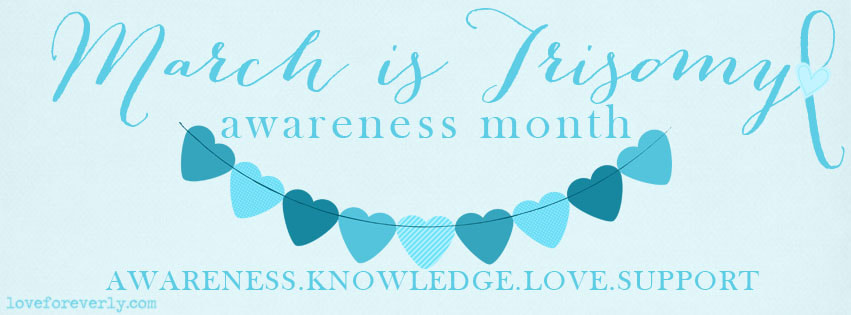
National Trisomy Awareness Month: what is Trisomy?

3/1/2018

 
Picture
March is Trisomy awareness month, so it’s a perfect time to explain “what is trisomy?” Most people have 23 pairs of chromosomes, for a total of 46 chromosomes total.  Trisomy is a genetic disorder in which an individual has an extra chromosome (partial or whole). Early identification is important in order to best evaluate, treat, and monitor for any possible developmental deficits or possible medical complications.  Educating others of trisomy is important to not only provide a better understanding of the syndromes but to reinforce the notion that early intervention is vital for academic and social success.

Most common Trisomy disorders:

Read More

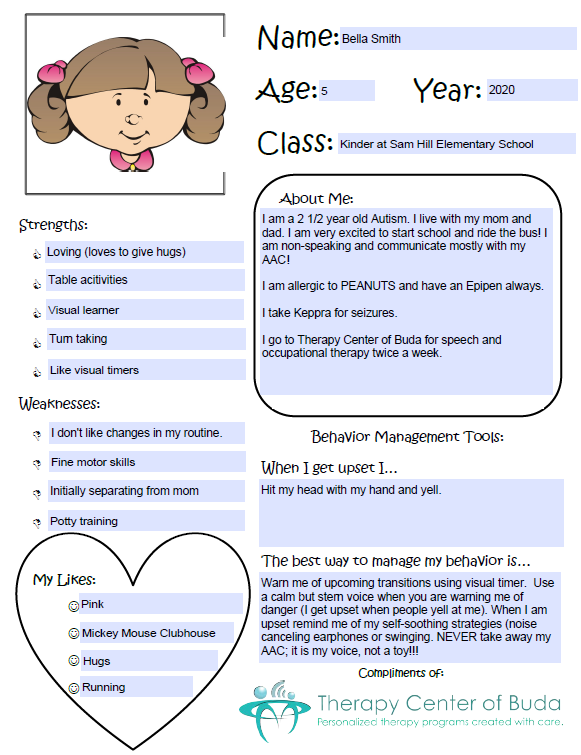
All About Me! (FREE download)

8/10/2017

 
Don't we all want to give a synopsis of our kiddos for their teacher/s at the beginning of the school year? Basically give them a resume of likes/dislikes/what works and doesn't? Well, you are NOT alone! We made this handy PDF to fill in the blanks and even add a photo of your child.  When you meet the teacher/s, aides, therapists, or even babysitters just hand them this "All About Me" page so they are sure to know all about your kiddo.  Download is available for FREE, just click the Download File button below and start filling in the blanks!
Picture
tcob_all_about_me_2017.pdf
File Size: 474 kb
File Type: pdf
Download File

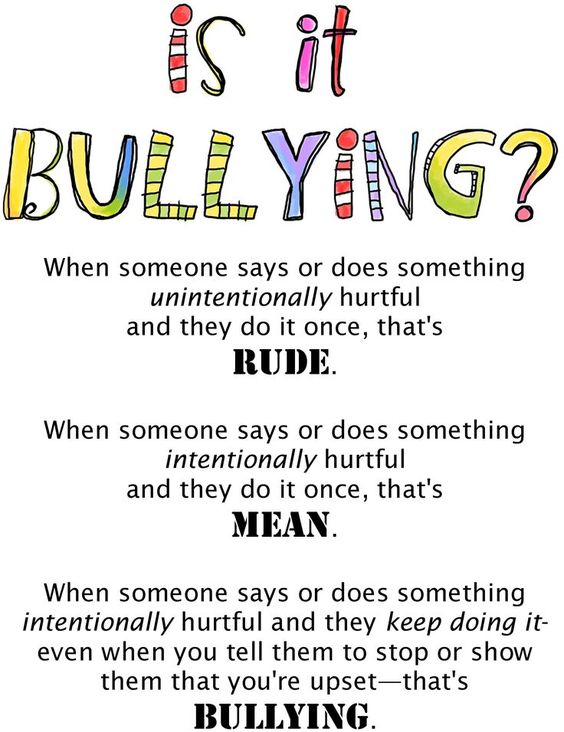
Let's talk about bullying.

1/31/2017

 
Picture
Speak to your child about bullying with these tips:
  1. Discuss with your child what bullying IS and what it is NOT.
  2. Take bullying seriously. Notify school authorities if you feel your child is being bullied.  Make sure your kiddo understands that you will not tolerate bullying at home or anywhere else.
  3. Teach kids to treat others with respect and kindness.
  4. Learn about your child's social life. Ask open ended questions (instead of yes/no questions).
  5. Encourage good behavior and set a good example.

Trick-or-Treating for ALL!

10/26/2016

 
Picture
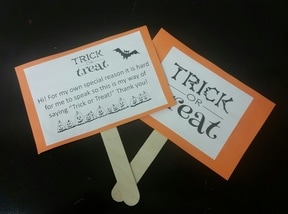
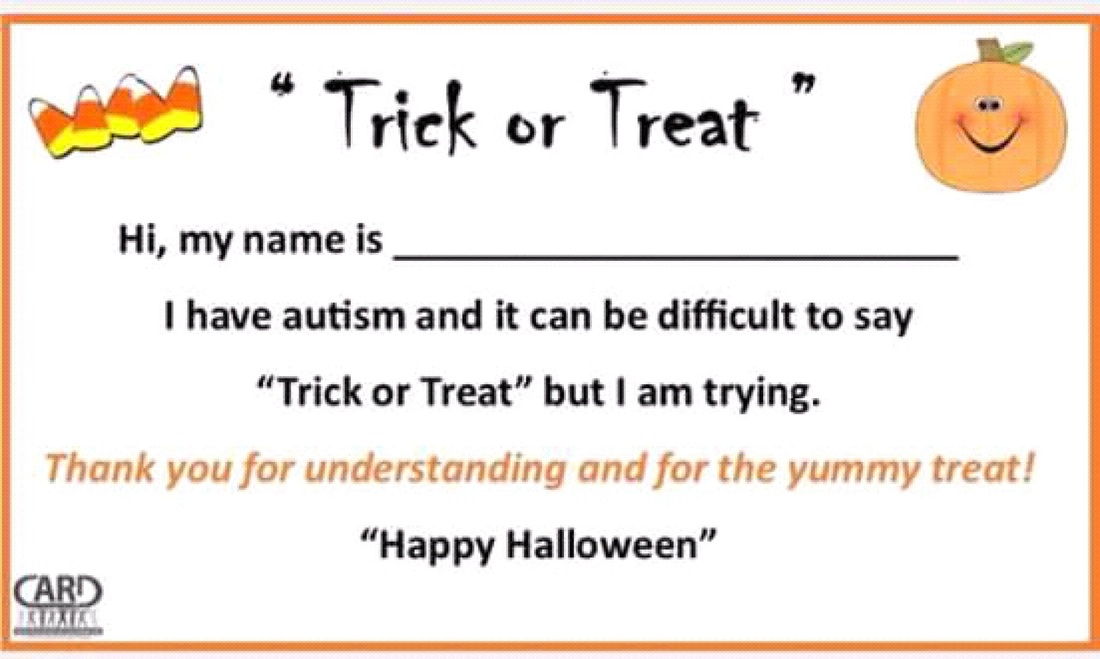
Halloween is a really fun time…for most kiddos. But for those having difficulty with communicating, trick-or-treating can be very difficult task and so stressful that some will exclude themselves from enjoying such an activity.  We truly believe that although we all may have differences these are simply that and we must find different ways to include all children that would like to participate.  One of our therapists came up with this simple craft you can do at home WITH your child to help give him/her a voice to be included in trick-or-treating. 


Read More

Now Available: Testing for Austism 

8/16/2016

 
Picture
Did you know that Therapy Center of Buda offers Autism Testing?  Our Certified Autism Specialist and your pediatrician work together to collect all necessary data to identify if your child is on the Autism Spectrum. 

We will provide you a comprehensive report and explain the outcomes. If needed, our specialist will personally provide you with recommendations and access to local, state, and federal resources that may help your child. Call us today for more information!

What you should know:
  1. We utilize the Autism Diagnostic Observation Schedule (ADOS-2) a well know diagnostic tool to identify Autism in children and adolescents.
  2. Before we administer the ADOS we conduct a comprehensive speech-language evaluation.
  3. Testing is conducted over 2 consecutive days.
  4. Parents remain in the room and participate in data gathering!
  5. We bill your insurance!
  6. We test individuals 12 months to 21 years old.
  7. Your pediatrician must support the testing (meaning if you are utilizing your insurance benefits they must send a prescription indicating ADOS testing is recommended).
  8. Not only will you get a comprehensive report following your visit/s, but our specialist will personally provide you with recommendations and access to local, state, and federal resources that may help your child.

TRICK OR TREATING

10/8/2015

 
Picture
This is a wonderful way to help those with communication challenges exercise independence during trick or treating.

A special thank you to CARD-USF for coming up with such a great idea!

Please share!
    A smiling woman with light skin, shoulder-length dark brown hair, and large dark-framed glasses. She is wearing a maroon top with a black cardigan and a delicate necklace. The background is white, and the image is cropped in a circular frame. Picture of Amy Grant

    Author

    Amy Grant is a licensed Speech-Language Pathologist and Clinic Director of Therapy Center of Buda. Special Focus: Autism/ ADHD

    Learn More About Amy
    View my profile on LinkedIn
    Family Corner Blog
    Learn parenting tips, access credible resources on disabilities and find out how to bring therapy techniques home with you to make parenting a little bit easier.  Legal Disclaimer

    Categories

    All
    ADHD
    ADLs
    Advocacy
    After School Therapy
    Apraxia
    Articulation
    AuDHD
    Autism
    Communication
    Developmental Milestones
    Developmental Toys
    Down Syndrome
    Dysgraphia
    Dyslexia
    Echolalia
    Events
    Family Support
    Feeding And Swallowing
    General
    Handwriting
    Language Delays
    Learning Disabilities
    Narrative Langauge
    Neurodiversity Affirming
    Occupational Therapy
    Parenting Tips
    PDA
    Perseveration
    Potty Training
    Pragmatic Language
    School
    Sensory Integration
    Speech Language Therapy
    Speech-Language Therapy
    Stuttering
    Tongue Tie
    Written Language
    W Sitting
    W-Sitting

    Subscribe

    RSS Feed

    Archives

    September 2025
    August 2025
    June 2025
    July 2024
    March 2023
    September 2020
    June 2020
    May 2020
    April 2020
    March 2020
    October 2019
    June 2019
    May 2019
    April 2019
    March 2019
    January 2019
    December 2018
    October 2018
    September 2018
    June 2018
    May 2018
    April 2018
    March 2018
    February 2018
    September 2017
    August 2017
    June 2017
    May 2017
    April 2017
    March 2017
    January 2017
    October 2016
    August 2016
    May 2016
    April 2016
    March 2016
    February 2016
    January 2016
    December 2015
    November 2015
    October 2015
    September 2015
    June 2015
    May 2015
    March 2015
    January 2015
    December 2014

Therapy Center of Buda

Contact 
Therapy Services
Our Team
Logo of the Therapy Center of Buda featuring a neurodiversity infinity symbol in a rainbow watercolor style. The words

WHAT OUR PARENTS SAY 

I am so happy with the care my daughter gets here. Everyone is helpful and patient. Amy took extra time 
with me and my wife to explain exactly what was happening with my daughter and explain how therapy was going to help. I love that she involves us in the sessions and we have seen major improvements. I would recommend this clinic to anyone!
-Paul S.
I can't say enough about how much my son has progressed and continues to progress in their care. The love and compassion, professional atmosphere, and top notch therapists make this place the best in central Texas. We are forever grateful to Amy Grant, Miss Angeli, Suzie and Brandi.


- Amy P.
Photos from stevendepolo, stevendepolo, stevendepolo, stevendepolo