Therapy Center of Buda
Connect with us
  • Home
  • Services
    • Services
    • Autism/ PDA Testing
  • Our Team
  • Family Corner Blog
  • Contact
  • Pay Your Bill
  • Jobs
  • Employee Portal

Dr. Seuss Day/ Read Across America Day

3/2/2018

 
Picture

Read More

National Trisomy Awareness Month: what is Trisomy?

3/1/2018

 
Picture
March is Trisomy awareness month, so it’s a perfect time to explain “what is trisomy?” Most people have 23 pairs of chromosomes, for a total of 46 chromosomes total.  Trisomy is a genetic disorder in which an individual has an extra chromosome (partial or whole). Early identification is important in order to best evaluate, treat, and monitor for any possible developmental deficits or possible medical complications.  Educating others of trisomy is important to not only provide a better understanding of the syndromes but to reinforce the notion that early intervention is vital for academic and social success.

Most common Trisomy disorders:

Read More

What's Narrative Language and why is it important?

2/26/2018

 
Narrative language skills are vital to a person’s ability to not only have successful social relationships but also impact academic work (e.g., written language).  Narrative skills are the ability to use language to tell a story.  These skills begin to develop at the young age of 2 years! As a child’s narrative language skills develop they will begin to follow rules of storytelling (e.g., sequencing events, including characters, having an event/dialogue/solution, and an ending). Narratives may be fiction or non-fiction.

What should your child be doing? Check out this chart of narrative development.

Read More

Stuttering (aka Dysfluent Speech)

2/19/2018

 
Picture
The term “stutter” is terribly outdated and oftentimes negatively viewed, rather I like the term “dysfluent speech.” It is important to remember that we all have moments of dysfluent speech, that doesn’t necessarily mean we all need speech-language therapy to address it.   The line that we draw to determine if therapy is recommended is the impact the dysfluent moment have on one’s life, the severity/ frequency/duration of dysfluent moments, and the accompanying tension with the dysfluent moments.

Some of the most common types of dysfluent speech include:
  • Single word repetition (e.g. “I I I I I want a hamburger.”)
  • Phrase repetition (e.g.,” I want a ham-ham-hamburger.”)
  • Blocking (e.g., “I want a ham (pause) burger.”)
  • Prolongation (e.g., “I want a hammmmmmmburger.”)
  • Avoidance (avoiding saying word/s because the speaker anticipates a dysfluent moment)
  • Fillers (inserting words/sounds to offer the speaker more time to prepare for what they are saying; "like, "uh", "and".)

Read More

Dysgraphia

2/18/2018

 
For many children with Dysgraphia, just holding a pencil and organizing letters on a line is extremely challenging.  Many struggle with spelling and putting thoughts on paper.  It is important that we remember Dysgraphia is not “laziness” or “sloppiness,” using these terms in from of your child with Dysgraphia can negatively impact their self-esteem and increase their anxiety resulting in refusal to write.  Many children diagnosed or suspected of having Dyslexia also exhibit symptoms of Dysgraphia.  Symptoms of Dysgraphia  include:
  • Illegible handwriting
  • Slow, labored writing
  • Mixing print and cursive letters
  • Spacing letters and words oddly
  • Poor spelling and grammar
  • Difficulty gripping a pencil
  • Incorrect punctuation
  • Run-on sentences and lack of paragraph breaks
  • Trouble organizing information when writing
If you suspect your child may have Dysgraphia talk to your pediatrician or call us to see if occupational therapy could help!

Win your pair of tickets to a Day Out With Thomas!

9/25/2017

 
Do you have your tickets to the Day Out With Thomas yet? Don't worry,  we have you covered! We have TWO tickets to this awesome event we will give away this Friday (September 29, 2017) at noon. Want to throw your name in the drawing? All you have to do is write a review for TCOB on Google, Facebook, Yahoo, etc. Each review that gets posted gets entered to win (This means you can be entered several times if you post on different sites)!
Picture
DAY OUT WITH THOMAS TICKET includes a scheduled 25 minute train ride (October 1, 2017 at 11am) behind Thomas the Tank Engine, all day admission to the Day Out With Thomas events at the Burnet Community Center, and the following activities:
  • Photos opportunities with Thomas the Train and Sir Topham Hatt
    *Photo packages can also be purchased by on-site photographer
  • Rock climbing wall
  • Inflatable Cranky the Crane
  • Miniature golf
  • Thomas Imagination Station of interactive play
  • Temporary tattoo station
  • Arts and crafts at Imagination Station
  • Traveling balloon twisters
  • Wooden Thomas play station
  • Live children’s musical performances
  • Storytelling and videos
  • Magician
  • Gift shop
http://www.austinsteamtrain.org/special-events/day-out-with-thomas/
 
**The winner will be announced via our Facebook page and the winner MUST pick up their prize by 6pm Friday September 29, 2017 at our office location (photo identification MUST match the name of the person shown online as the reviewer).**

All About Me! (FREE download)

8/10/2017

 
Don't we all want to give a synopsis of our kiddos for their teacher/s at the beginning of the school year? Basically give them a resume of likes/dislikes/what works and doesn't? Well, you are NOT alone! We made this handy PDF to fill in the blanks and even add a photo of your child.  When you meet the teacher/s, aides, therapists, or even babysitters just hand them this "All About Me" page so they are sure to know all about your kiddo.  Download is available for FREE, just click the Download File button below and start filling in the blanks!
Picture
tcob_all_about_me_2017.pdf
File Size: 474 kb
File Type: pdf
Download File

Theme Weeks!!

6/30/2017


Therapy Center of Buda Summer Fun Theme Weeks

                Summer has come and the staff at Therapy Center of Buda is ready to celebrate! Each week in July will be a theme week, where therapy activities will revolve around a summertime theme.

Themes for the month include:
July 3rd- 7th – 4th Of July Celebration
July 10th- 14th – Ocean Adventures
July 17th-21st – Amusement Park Fun
July 24th-28th – Summer Fun Activities
          
      The first week will kick off with a bang on July 3rd- with a 4th of July themed celebration. During this week the therapy gym will be decked out in red, white, and blue for a fun 4th of July Scavenger Hunt. Come and enjoy other activities such as making your own confetti poppers, painting fireworks, Pop Rock Goop, and much more! We can’t wait to celebrate summer fun with you all month long!
Water Bead Fun!!!

5/4/2017

 
Meet the newest addition to my therapy room… WATER BEADS! They are squishy, bouncy, and great for playful learning. There are so many ways to use water beads in order to develop speech and language. I created a sensory bin with my water beads and I wanted to share my ideas with you!

1. Place your child’s favorite toys in the sensory bin to target requesting, spatial concepts, following directions, identifying, answering questions, and labeling. “Can you find the cow? Where does a cow live? What does a cow say? Can you put the cow at the bottom?”
 
2. It is so easy to target articulation goals with a sensory bin. Place laminated flashcards inside and have children say the word using their “good sounds” when they find it. This is much more fun than sitting at a table and doing boring homework. :-)

3. Let your child explore! Teach verbs (digging, pouring, mixing), adjectives (slimy, bouncy, squishy, wet), colors, and sizes. Use kitchen utensils for pretend play. Get creative and have fun!

I purchased a package of water beads on Amazon, a container from Dollar Tree, and used flashcards and toys we have around the clinic. This is an inexpensive project that can make targeting speech and language goals more fun and engaging. I hope you enjoy the water beads as much as I do!

Meagan Milligan, B.S., SLP-A

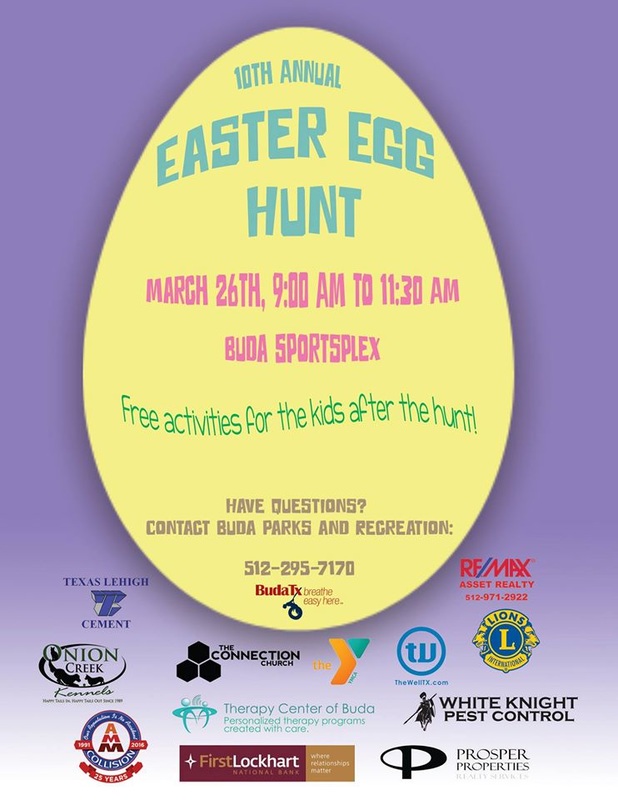
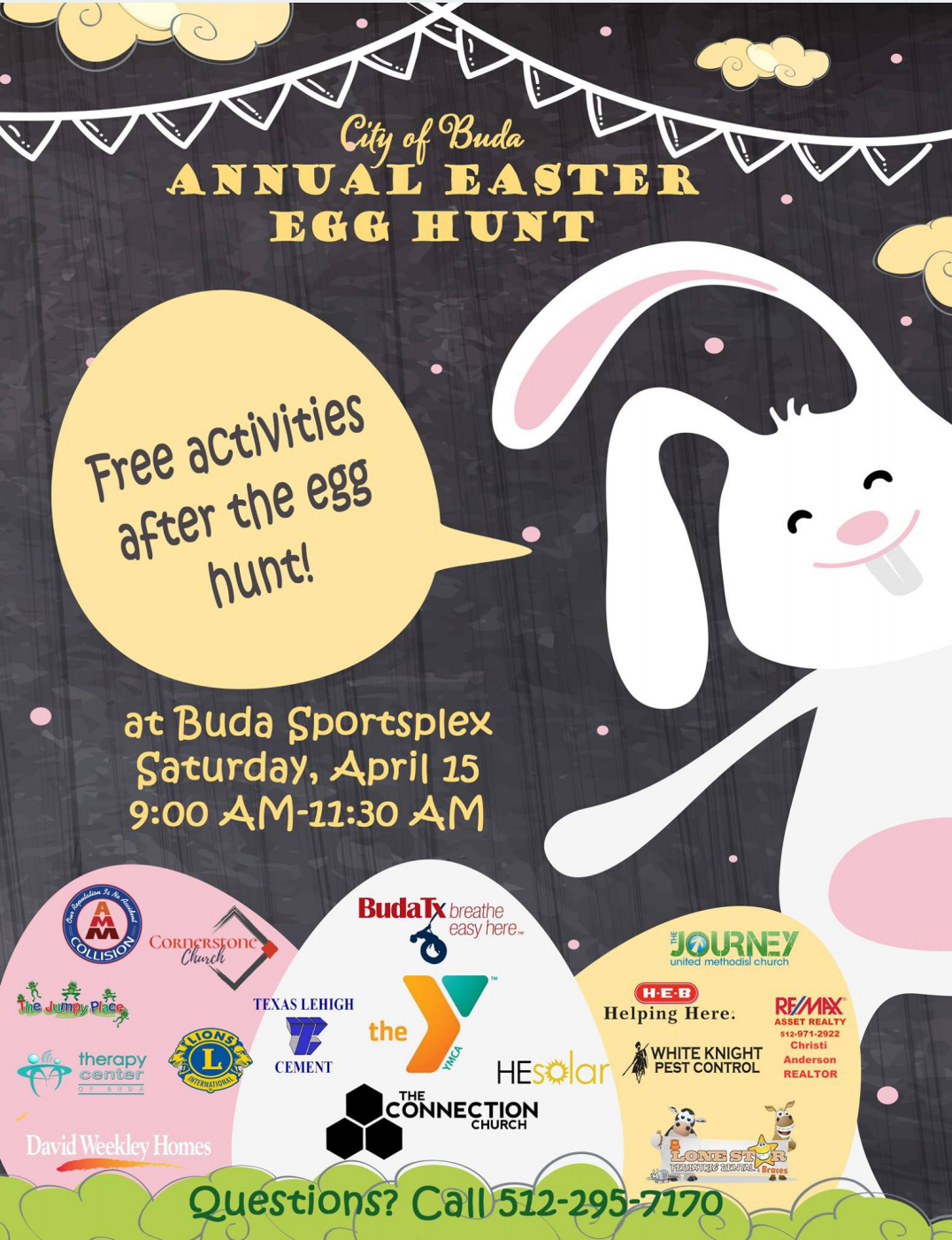
2017 Egg Hunt

4/5/2017

 
Picture

10 Early Signs and Symptoms of Childhood Apraxia of Speech

3/7/2017

 
By: Laura Smith

I was a practicing speech-language pathologist for five years before my daughter was born. I worked primarily at the elementary and middle-school levels. I took professional development workshops on childhood apraxia of speech (CAS) and treated it successfully in three kiddos from my caseload. Perhaps that’s why I was bewildered, angry and utterly devastated when I missed those very signs in my own child.
I hadn’t yet worked in early intervention, so I missed what seem like obvious signs to me now that I specialize in the disorder. I urge all SLPs to learn more about CAS, because the disorder requires a specialized approach different from other commonly used treatments for speech and language delays.
In addition, ASHA denotes that the qualified professional to diagnose CAS is an SLP with specialized knowledge in motor learning theory and skills with differential diagnosis in childhood motor speech disorder, not a neurologist or other medical practitioner. It’s important to know the signs, but also to refer your client to a qualified SLP for differential diagnosis if you suspect childhood apraxia of speech.
Here are 10 early signs and symptoms of childhood apraxia of speech:
  • Limited babbling, or variation within babbling
  • Limited phonetic diversity
  • Inconsistent errors
  • Increased errors or difficulty with longer or more complex syllable and word shapes
  • Omissions, particularly in word initial syllable shapes
  • Vowel errors/distortions
  • Excessive, equal stress
  • Loss of previously produced words
  • More difficulty with volitional versus automatic speech responses
  • Predominant use of simple syllable shapes
Other non-speech “soft signs” that may be present include:
  • Impaired volitional oral movements (oral apraxia)
    • Difficulty with volitional “smiling” “kissing” “puckering”
  • Delays with fine/gross motor skills
  • Feeding difficulties that include choking and/or poor manipulation of food
  • General awkwardness or clumsiness
These are early signs, but many overlap with other phonologic and language delays, so it’s important to keep in mind that differential diagnosis is critical, as over-diagnosis of CAS remains problematic. It’s still a relatively rare disorder; however, there are resources that can help if you suspect it.
You can tap the below resources to learn more about childhood apraxia of speech.
  • Apraxia-kids.org (CASANA):
    • Offers a growing library of on-demand webinars for professionals and parents.
    • Maintains a list of SLPs nationwide who are CASANA-recognized with advanced training and expertise and who are available for consult.
  • ASHA.org:
    • Recently developed a practice portal for childhood apraxia of speech.
    • Compiled a comprehensive technical report.


Laura Smith, MA, CCC-SLP, is a school-based and private clinician in the Denver metro area specializing in childhood apraxia of speech. She’s CASANA-certified for advanced training and clinical expertise in Childhood Apraxia of Speech and often speaks at conferences and consults for school districts or other professionals.
Original blog: http://blog.asha.org/2015/04/09/10-early-signs-and-symptoms-for-childhood-apraxia-of-speech/

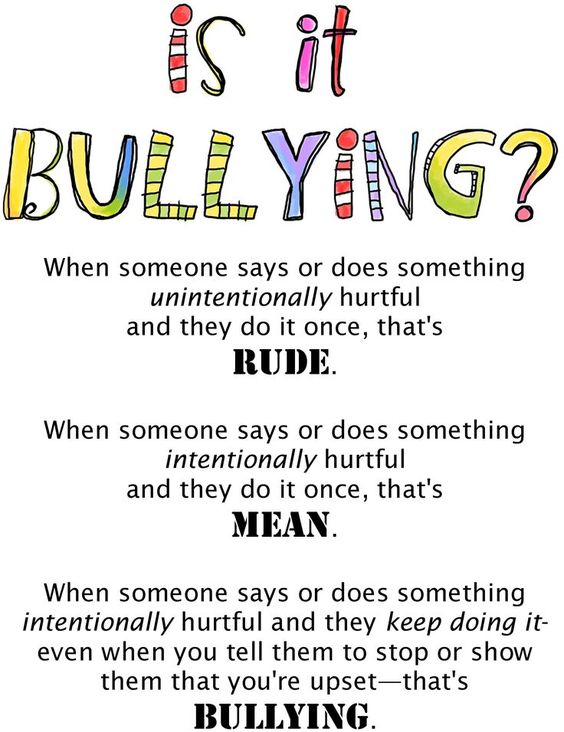
Let's talk about bullying.

1/31/2017

 
Picture
Speak to your child about bullying with these tips:
  1. Discuss with your child what bullying IS and what it is NOT.
  2. Take bullying seriously. Notify school authorities if you feel your child is being bullied.  Make sure your kiddo understands that you will not tolerate bullying at home or anywhere else.
  3. Teach kids to treat others with respect and kindness.
  4. Learn about your child's social life. Ask open ended questions (instead of yes/no questions).
  5. Encourage good behavior and set a good example.

Talking to our kiddos about their school day

1/1/2017

 
Picture
Talking to our kiddos about their day at school is important.  “Did you have a good day?” seems to be the automatic question we all ask, but it is important as parents to elicit more of a response.  We want kiddos to learn to tell us about things, not just answer questions with one word (close ended questions).  Let’s find some open ended questions that get our kids communicating with us! 

Read on for some sample questions.


Read More

Trick-or-Treating for ALL!

10/26/2016

 
Picture
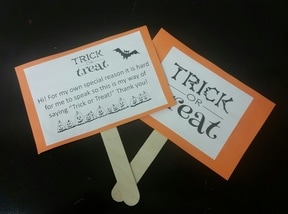
Halloween is a really fun time…for most kiddos. But for those having difficulty with communicating, trick-or-treating can be very difficult task and so stressful that some will exclude themselves from enjoying such an activity.  We truly believe that although we all may have differences these are simply that and we must find different ways to include all children that would like to participate.  One of our therapists came up with this simple craft you can do at home WITH your child to help give him/her a voice to be included in trick-or-treating. 


Read More

To sippy cup or not to sippy cup… that is the question!

8/30/2016

 
Picture
It’s no secret to my families that I am not a fan of sippy cups.  I get that they are a matter of convenience, but there are reasons why we should just skip over the sippy and head straight to open and straw cups.  Let’s check out the pros and cons from a speech-language pathologist’s (and oral cavity) perspective.


Read More

Now Available: Testing for Austism 

8/16/2016

 
Picture
Did you know that Therapy Center of Buda offers Autism Testing?  Our Certified Autism Specialist and your pediatrician work together to collect all necessary data to identify if your child is on the Autism Spectrum. 

We will provide you a comprehensive report and explain the outcomes. If needed, our specialist will personally provide you with recommendations and access to local, state, and federal resources that may help your child. Call us today for more information!

What you should know:
  1. We utilize the Autism Diagnostic Observation Schedule (ADOS-2) a well know diagnostic tool to identify Autism in children and adolescents.
  2. Before we administer the ADOS we conduct a comprehensive speech-language evaluation.
  3. Testing is conducted over 2 consecutive days.
  4. Parents remain in the room and participate in data gathering!
  5. We bill your insurance!
  6. We test individuals 12 months to 21 years old.
  7. Your pediatrician must support the testing (meaning if you are utilizing your insurance benefits they must send a prescription indicating ADOS testing is recommended).
  8. Not only will you get a comprehensive report following your visit/s, but our specialist will personally provide you with recommendations and access to local, state, and federal resources that may help your child.

Childhood Apraxia of Speech, What is it exactly?

5/2/2016

 
Childhood Apraxia of Speech (CAS) is a motor speech disorder.  CAS is a relatively uncommon disorder (1-2 children per 1,000= 0.1-0.2%) and  one of the lesser known disorders treated by Speech-Language Pathologists.  There are some identified causes of CAS (e.g., stroke, trauma, chromosomal abnormalities) but we are not truly sure of all of the causes. 

Read More

The BEST therapy is provided with love.

4/29/2016

 
We treat each child as the unique person we know they are with unwavering visions of participation in daily activities. Just because our kiddos may develop in different ways doesn't change the fact that they can soar to the highest heights. Watch one of our success stories.

Tongue Tie Basics

4/25/2016

 
Picture
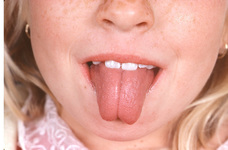
Heart shaped tongue tip during protrusion is a sign that tongue tie is most likely. Photo from: www.tonguetie.net
Picture
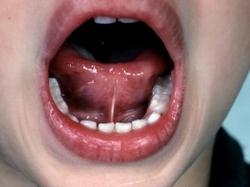
This photo shows the shortened lingual frenulum (tongue tie). Photo from: www.tonguetie.net
Medical name: Ankyloglossia
Description: Restricted movement of the tongue secondary to a malformation of the lingual frenulum.

As a speech-language pathologist, I frequently have kiddos come to see me with articulation difficulties and we discover that the misarticulations are in fact due to an unidentified tongue tie.  Tongue tie is actually more common than people realize.  At times we are able to identify the issue during infancy because the baby is having a difficult time feeding (e.g. latching or severe nipple pain).  Clippings at this age are much easier and always preferred to minimize articulation difficulties later.  But there are those kiddos that are overlooked because they found ways to adapt and feed adequately.  Kiddos with tongue tie usually have difficulty with the consonants: g, k, t, d, l, r, and consonant blends.  Sometimes tongue tie can result in a difficulty of eating solids, resulting in gagging or vomiting when trying new foods.  Tongue tie can be diagnosed by a pediatrician, speech-language pathologist, Otolaryngologist, and some dentists.  Common treatment for tongue tie is a simple surgery to “clip” the tongue and private speech-language therapy to strengthen musculature and address misarticulations. 

If you have concerns about your child’s lingual frenulum or the possibility of tongue tie, give us a call or email me with questions! 


Photos taken from: www.tonguetie.net

TCOB Camps are here

4/4/2016

 
We are excited to announce our very own summer camps!  Check out what is available below.  Your child does not need to receive treatment with us or have a diagnosis.  These camps are for all children!  Don't forget to tell a friend or two, we can only hold the camps with enough registered attendees.  

Read More
<<Previous
Forward>>
    A smiling woman with light skin, shoulder-length dark brown hair, and large dark-framed glasses. She is wearing a maroon top with a black cardigan and a delicate necklace. The background is white, and the image is cropped in a circular frame. Picture of Amy Grant

    Author

    Amy Grant is a licensed Speech-Language Pathologist and Clinic Director of Therapy Center of Buda. Special Focus: Autism/ ADHD

    Learn More About Amy
    View my profile on LinkedIn
    Family Corner Blog
    Learn parenting tips, access credible resources on disabilities and find out how to bring therapy techniques home with you to make parenting a little bit easier.  Legal Disclaimer

    Categories

    All
    ADHD
    ADLs
    Advocacy
    After School Therapy
    Apraxia
    Articulation
    AuDHD
    Autism
    Communication
    Developmental Milestones
    Developmental Toys
    Down Syndrome
    Dysgraphia
    Dyslexia
    Echolalia
    Events
    Family Support
    Feeding And Swallowing
    General
    Handwriting
    Language Delays
    Learning Disabilities
    Narrative Langauge
    Neurodiversity Affirming
    Occupational Therapy
    Parenting Tips
    PDA
    Perseveration
    Potty Training
    Pragmatic Language
    School
    Sensory Integration
    Speech Language Therapy
    Speech-Language Therapy
    Stuttering
    Tongue Tie
    Written Language
    W Sitting
    W-Sitting

    Subscribe

    RSS Feed

    Archives

    September 2025
    August 2025
    June 2025
    July 2024
    March 2023
    September 2020
    June 2020
    May 2020
    April 2020
    March 2020
    October 2019
    June 2019
    May 2019
    April 2019
    March 2019
    January 2019
    December 2018
    October 2018
    September 2018
    June 2018
    May 2018
    April 2018
    March 2018
    February 2018
    September 2017
    August 2017
    June 2017
    May 2017
    April 2017
    March 2017
    January 2017
    October 2016
    August 2016
    May 2016
    April 2016
    March 2016
    February 2016
    January 2016
    December 2015
    November 2015
    October 2015
    September 2015
    June 2015
    May 2015
    March 2015
    January 2015
    December 2014

Therapy Center of Buda

Contact 
Therapy Services
Our Team
Logo of the Therapy Center of Buda featuring a neurodiversity infinity symbol in a rainbow watercolor style. The words

WHAT OUR PARENTS SAY 

I am so happy with the care my daughter gets here. Everyone is helpful and patient. Amy took extra time 
with me and my wife to explain exactly what was happening with my daughter and explain how therapy was going to help. I love that she involves us in the sessions and we have seen major improvements. I would recommend this clinic to anyone!
-Paul S.
I can't say enough about how much my son has progressed and continues to progress in their care. The love and compassion, professional atmosphere, and top notch therapists make this place the best in central Texas. We are forever grateful to Amy Grant, Miss Angeli, Suzie and Brandi.


- Amy P.

​© 2025 Xanadu Rehabilitation Inc. dba Therapy Center of Buda. All rights reserved.
Photos from stevendepolo, stevendepolo, stevendepolo, stevendepolo